
Custom kitchen design in Mexico with an architectural approach
At Vitelier, we develop custom kitchens in Mexico from an architectural perspective, where each project responds to a specific way of living. We understand the kitchen as a system: a space that precisely articulates circulation, storage, ergonomics, and materiality. We don’t design based on isolated aesthetics, but rather on everyday use, durability, and construction logic.
For over a decade, we have worked on the design, manufacture, and installation of high-end kitchens, collaborating with architects, interior designers, and private clients in diverse residential contexts. Each kitchen we develop is unique because it responds to real-world variables: who uses it, how they cook, how long it lasts, and what the space requires.
This selection brings together representative projects from our work on modern kitchens in Mexico, including wooden kitchens, lacquered kitchens, outdoor kitchens, and custom-designed modular systems.
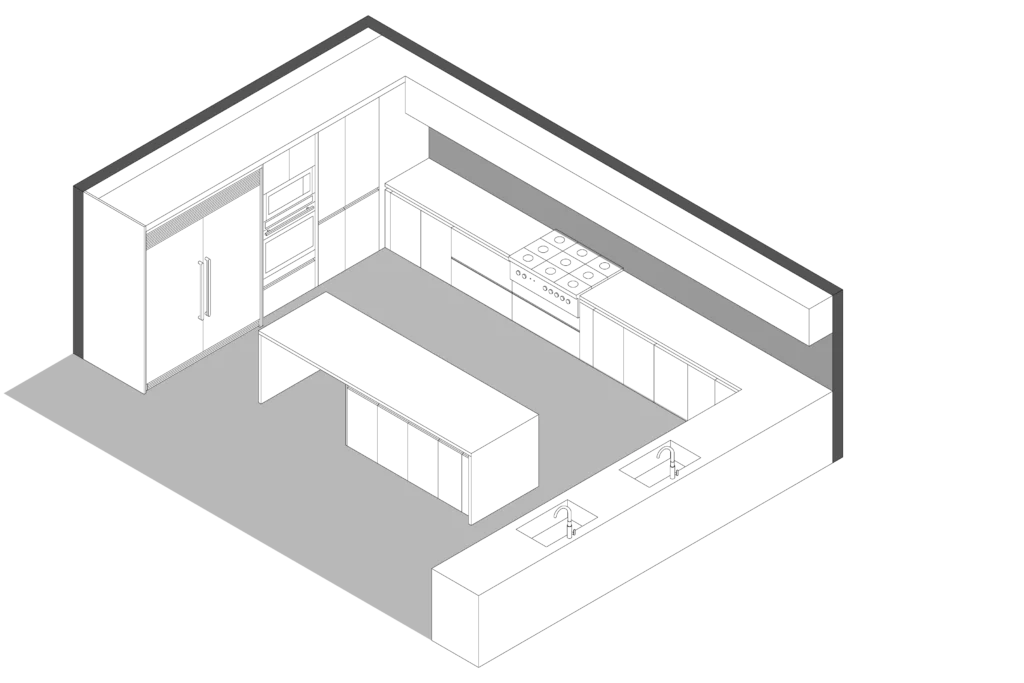
Our experience in kitchen design and architecture will help you transform your space into a unique, functional, and timeless kitchen.


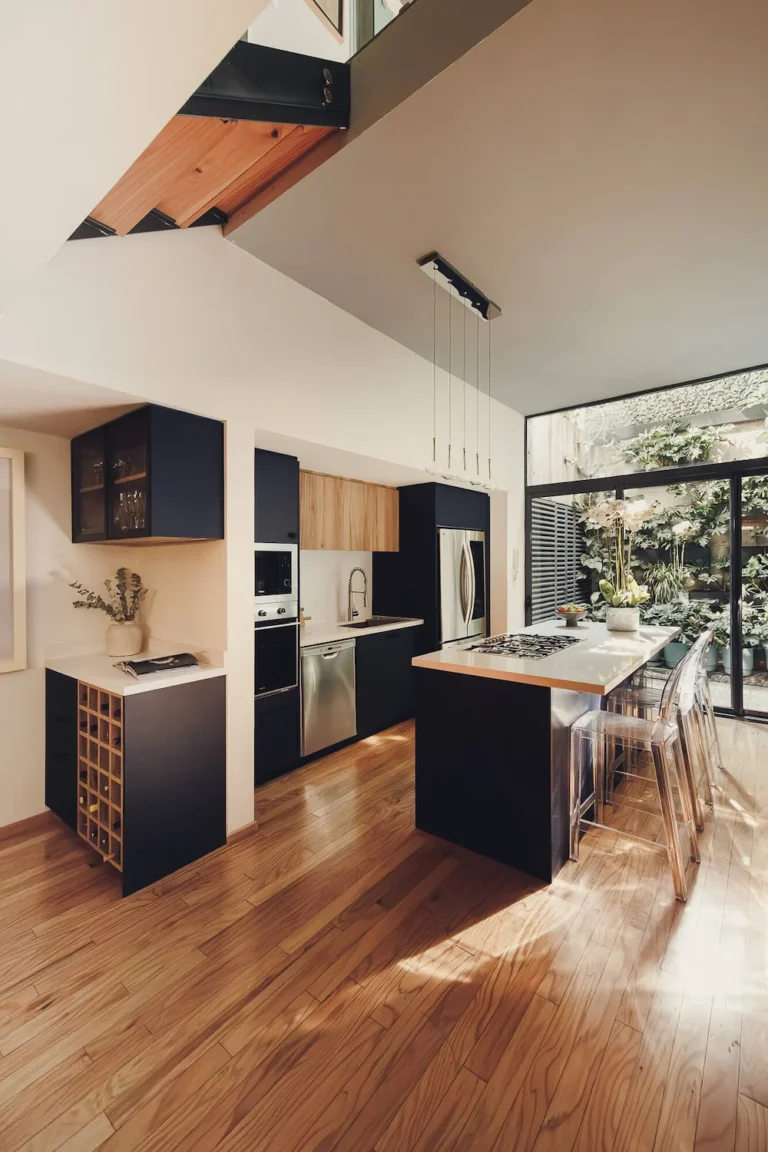
Kitchen design studio in Mexico
As a kitchen design studio in Mexico, at Vitelier we approach each project with a holistic approach that combines architecture, engineering, and manufacturing.
Unlike standard prefabricated or modular solutions, our kitchens are designed to integrate seamlessly into the space and respond to the specific conditions of each project: proportions, lighting, workflow, storage needs, and daily habits.
Our services include:
Custom kitchen design
Development of technical drawings and specifications
Selection of highly durable materials
Manufacturing in our own workshop in Mexico
Specialized on-site installation
We work with materials such as natural wood, high-resistance lacquers, stone, and technical surfaces, selected not only for their appearance but also for their long-term performance.
High-end kitchens designed to last
A Vitelier kitchen doesn’t follow fleeting trends. It’s designed to remain relevant and functional for decades.
That’s why every design decision considers:
Resistance to heavy use
Ease of maintenance
Precision in hardware and systems
Space optimization
The balance between aesthetics and function
This allows us to develop luxury kitchens in Mexico that rely not on ornamentation, but on the quality of their execution.
Materials and craftsmanship
Natural wood
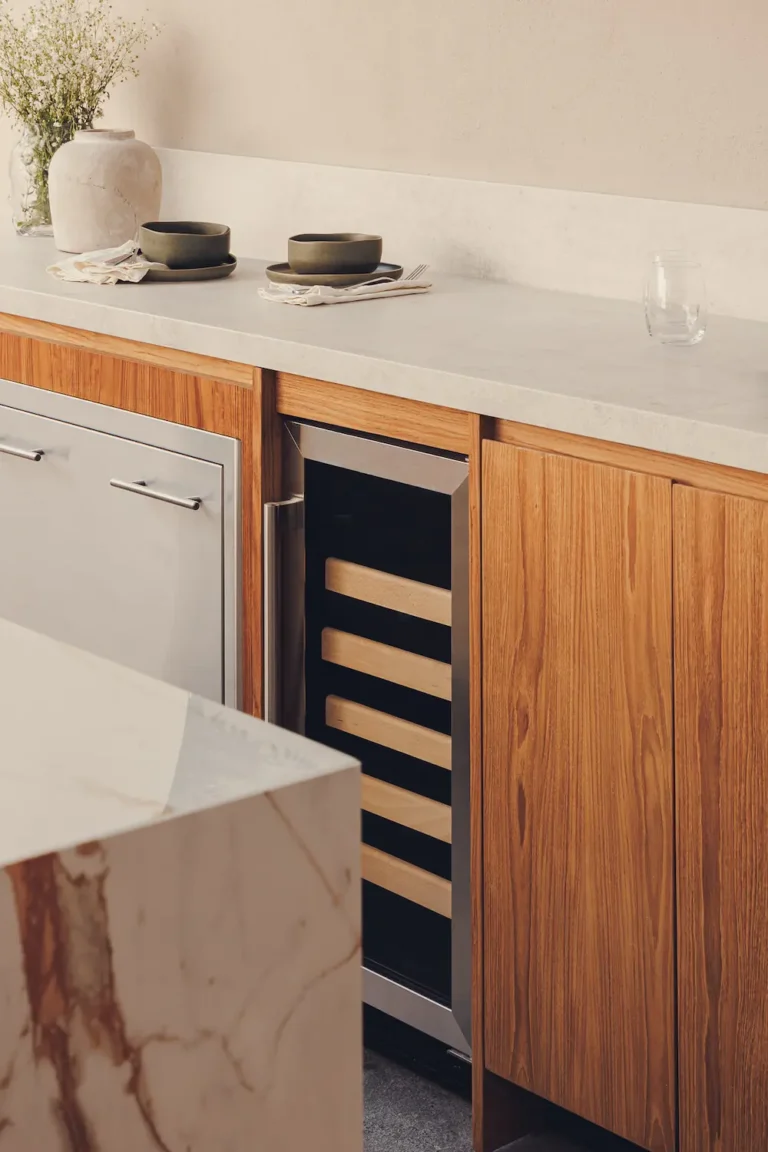
We work with species selected for their structural behavior and ability to age with character. Oak and walnut for their hardness and expressive grain. Tzalam and parota for their resistance to humidity changes and warm presence in spaces where the kitchen connects with living areas. Each species responds to different conditions — the choice is driven by context, not trend. → See our wood kitchen in Coyoacán
Lacquered finishes
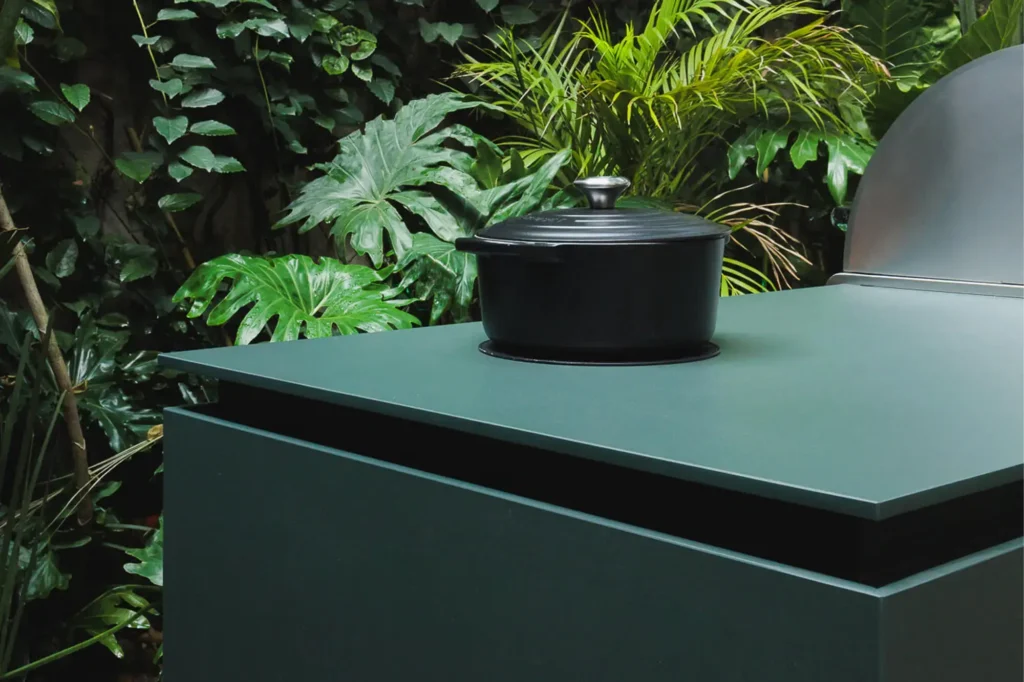
High-resistance surfaces that deliver visual precision and uniformity. Lacquered finishes are ideal for contemporary kitchens where clean lines and seamless planes define the design. Their durability depends on the application process — we use controlled curing systems that ensure stability under intensive use.
Natural stone and engineered surfaces
Countertops and work areas built with materials such as Dekton, Silestone, and Sensa, selected for their resistance to scratches, stains, heat, and UV radiation.
High-performance hardware
Hinges, drawer slides, and opening systems engineered to withstand thousands of daily use cycles for years. Hardware defines the everyday experience of a kitchen: how a drawer opens, how a door closes, how the space responds to the person using it.
What type of kitchen does your project need?
Not all kitchens are designed the same — because not all projects have the same demands. Understanding the difference between a modular kitchen, a custom kitchen, and an architectural kitchen allows for clearer decisions from the start.
A modular kitchen delivers speed through standardized components. A custom kitchen adapts dimensions and materials to the available space.
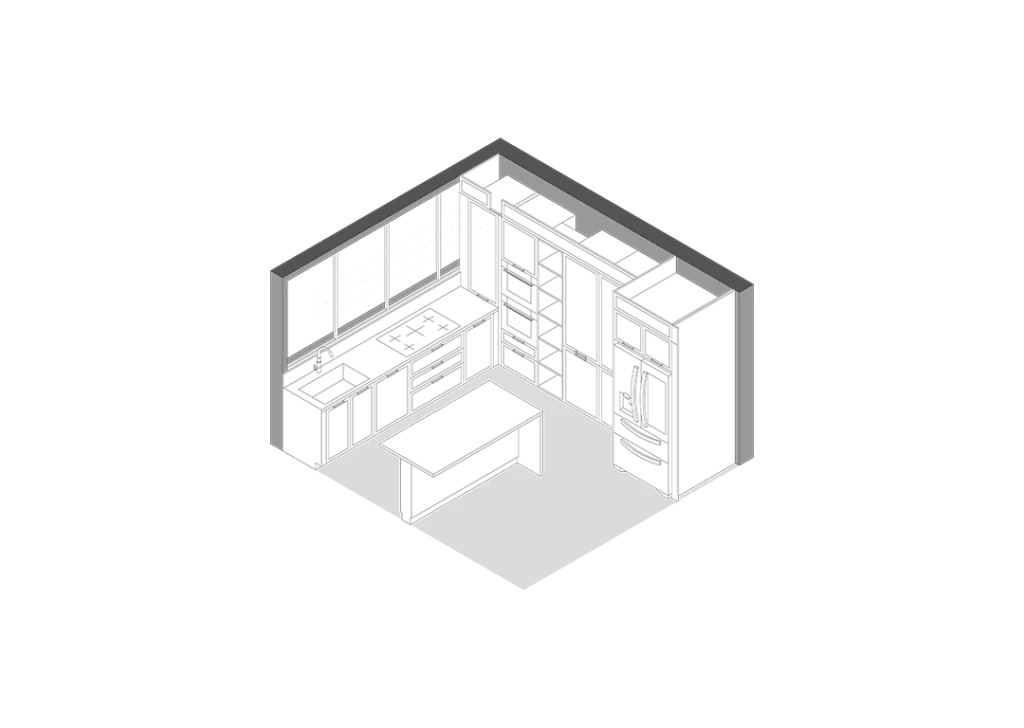
An architectural kitchen starts from a different logic: the design responds to the complete project — the structure of the property, the usage flows, the relationship with other areas of the home, and the material conditions of the space. → What it’s like to work with a kitchen designer in Mexico
At Vitelier, we work from this third perspective. Each kitchen is developed as a system that integrates ergonomics, storage, utilities, and materiality with the same precision as any other architectural space.
Comparison table
| Feature | Modular | Custom | Architectural |
|---|---|---|---|
| Layout | Pre-set from catalog | Adapted to available space | Designed from an analysis of the property and usage flows |
| Dimensions | Standard (fixed 30, 60, 90 cm modules) | Adjusted to the space | Projected based on ergonomics, circulation, and program |
| Materials | Limited options from manufacturer | Personalized selection | Technical selection based on performance, durability, and climate context |
| Architectural integration | Partial — adapts to existing space | Medium — resolves the assigned space | Total — design responds to the home's architecture |
| Utilities | Adjusted to the kitchen | Coordinated with the space | Projected alongside the design from technical drawings |
| Hardware | Standard range | Mid-to-high range | High-performance: opening systems, hinges, and slides for intensive use |
| Storage | Predefined configurations | Customized by zone | Designed per workstation based on actual usage habits |
| Design process | Module selection in showroom | Survey and adaptation | Listening, architectural design, technical development, manufacturing, and installation |
| Development time | 2–4 weeks | 4–8 weeks | 8–16 weeks depending on project complexity |
| Projected durability | 5–10 years | 10–15 years | 20+ years |
| Ideal for | Quick solutions, tight budgets | Spaces with specific requirements | Residential projects where the kitchen is a central living space |
How we develop a kitchen
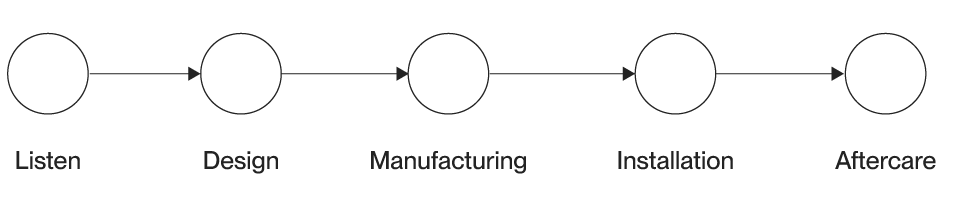
Every project follows a methodology that integrates design, manufacturing, and installation with technical rigor and close collaboration.
Listen
We learn how the kitchen is lived in: habits, daily rhythms, priorities, and the conditions of the existing space.
Design
We translate that understanding into a project that integrates ergonomics, spatial layout, storage, and materiality.
Manufacturing
Each piece is produced with controlled processes and direct supervision from the design team. → See our Fuori kitchen at Obra Blanca 2025
Installation
We personally supervise the assembly to ensure that each kitchen functions exactly as it was conceived. → See our outdoor kitchen in Flamencos
Aftercare
We stay with the project after delivery: adjustments, technical support, and the evolution of the space over time.
This process ensures coherence between the initial idea and the built result.
Frequently asked questions
How long does it take to design and build a custom kitchen?
The complete process — from the first conversation to installation — takes between eight and sixteen weeks, depending on the project’s complexity. Architectural design and technical development require time because every decision — layout, materiality, hardware, utilities — is defined with precision before manufacturing begins. We don’t rush stages: rigor in the process is what allows a kitchen to perform correctly for decades.
Does the project include manufacturing and installation?
Yes. At Vitelier, we manage the entire development: architectural design, technical drawings, material selection, manufacturing at our workshop in Mexico City, and supervised on-site installation. This integration between design and manufacturing allows us to maintain control over every constructive detail and ensure the result matches what was designed.
Do you design kitchens for remodels?
A significant portion of our projects involves developing new kitchens within existing homes. Remodeling requires careful analysis of the building’s conditions — structure, plumbing and electrical systems, ventilation — to integrate the new design without compromising the space’s functionality. We coordinate with architects and contractors when the project requires it.
Do you only work in Mexico City?
Our workshop and studio are based in Mexico City, where we develop most of our projects. We also collaborate in other cities across the country — Valle de Bravo, San Miguel de Allende, Los Cabos, Querétaro, and Mérida — when project conditions allow it. Manufacturing always takes place at our Mexico City workshop, with installation coordinated on site. → See our recent project at Design House 2025
You are here:
Home → Kitchens