Renovating or building a kitchen in Mexico is a fundamentally different process from what most North American homeowners are accustomed to. The construction methods are different. The supply chains are different. The way design, fabrication, and installation relate to each other is different.
None of this makes the process worse — in many ways, it makes it better. But understanding these differences before you begin is the difference between a project that unfolds with clarity and one that generates unnecessary anxiety.
This guide explains how the kitchen design process works in Mexico, what distinguishes a design studio from other options, and what you should expect at each stage if you’re working with a professional team.
How kitchen construction differs in Mexico
In the United States and Canada, residential kitchens are installed inside wood-framed walls. Cabinets are manufactured to standardized dimensions, shipped flat-packed, and assembled on site by contractors who may never have spoken with the designer.
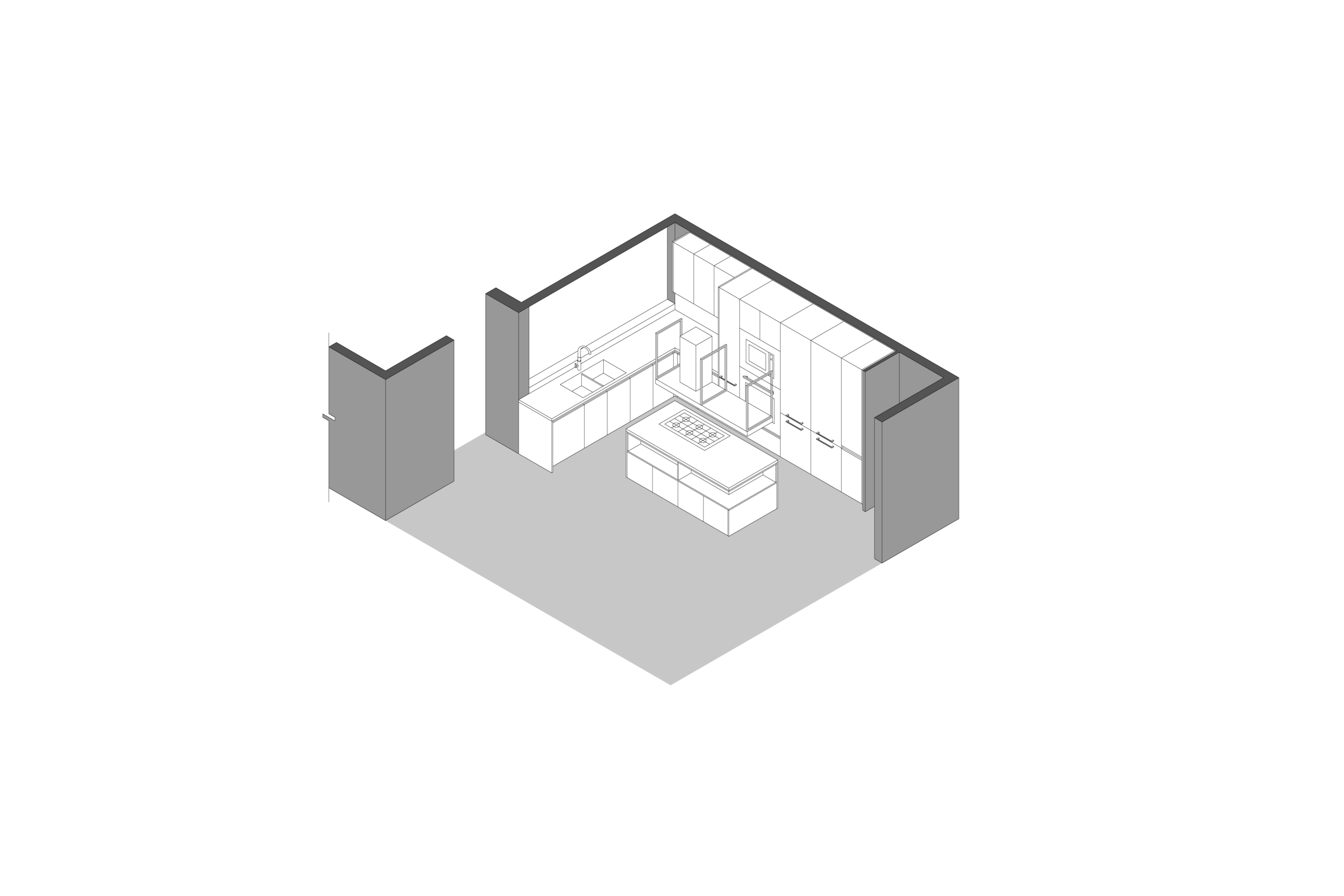
In Mexico, homes are built with reinforced concrete and masonry. Walls are structural. Floors are poured. Plumbing and electrical lines run through concrete, not between wooden studs. This means that kitchen design in Mexico requires a closer dialogue between architecture, engineering, and cabinetry — the kitchen cannot be treated as furniture placed against drywall.
This structural reality is precisely why working with a design studio matters. A studio that understands both the architectural context and the fabrication process can coordinate what a general contractor working from a catalog cannot.
What a kitchen design studio actually does
The term “kitchen designer” covers a wide range of services in Mexico, from showroom salespeople who configure modular catalogs to independent carpenters who build cabinets to specification. A design studio operates differently.
A studio approaches the kitchen as an architectural project. It begins with analysis — of the space, the people who will use it, the existing structure, and the relationship between the kitchen and the rest of the home. From that analysis, it develops a design that integrates spatial distribution, ergonomics, materials, and technical systems into a single coherent proposal.
The key distinction: a studio controls the entire process. Design, technical documentation, fabrication, and installation happen under one roof, or at minimum under one team’s supervision. This eliminates the coordination gaps that cause most renovation problems — the architect who doesn’t speak to the carpenter, the carpenter who doesn’t understand the plumbing, the plumber who arrives after the countertop is already installed.
The design process, step by step
Every studio works slightly differently, but a well-structured process typically follows six stages.
1. Initial conversation
The project begins with a meeting — in person or by video call — where the design team asks a series of questions that may seem unusual if you’re accustomed to North American kitchen showrooms. Rather than starting with cabinet styles or countertop colors, the conversation focuses on how you live.
Who cooks? How often? Do you entertain? Do you eat in the kitchen or elsewhere? How do you move through the space? What do you store, and where?
These questions are not decorative. They determine the spatial logic of the entire project — the placement of work zones, the type and amount of storage, the relationship between the kitchen and adjacent areas.
2. Concept design
Based on that conversation and a detailed survey of the existing space, the design team develops an initial concept: floor plans, elevations, and often 3D visualizations that show how the kitchen will look and function.
At this stage, materials are proposed — wood species, lacquer finishes, countertop surfaces, hardware systems — based on both aesthetic preferences and technical performance. A responsible studio will explain why certain materials suit certain conditions. Coastal humidity, altitude UV exposure, and daily use intensity all affect material selection differently.
3. Technical development
Once the concept is approved, the project moves into technical documentation: detailed fabrication drawings, material specifications, hardware schedules, and coordination with plumbing, electrical, and gas installations.
This is the stage where precision matters most, and where the difference between a studio and a general contractor becomes most visible. A studio produces construction-level documentation. A contractor typically does not.
4. Fabrication
In a studio model, the kitchen is manufactured in a controlled workshop environment — not assembled on site from pre-cut parts. This allows for higher tolerances, better quality control, and the kind of joinery and finishing that flat-pack systems cannot achieve.
Fabrication timelines vary depending on complexity, but most custom kitchens in Mexico require four to eight weeks of production time after technical documentation is finalized.
5. Installation
Installation is not delivery. A properly managed installation involves the design team supervising the placement, leveling, and connection of every component. Countertops are templated and cut after cabinets are in place — not before. Appliances are integrated according to manufacturer specifications. Hardware is adjusted for smooth operation.
A studio that fabricates in-house will typically handle installation with its own team, ensuring continuity between what was designed, what was built, and what is finally assembled in your home.
6. Aftercare
A detail that many homeowners overlook: kitchens require post-installation attention. Hardware may need adjustment after the first weeks of use. Wood responds to humidity changes. Hinges settle. A professional studio includes a follow-up period to address these natural adjustments.
What to look for when choosing a kitchen designer in Mexico
If you’re evaluating designers or studios, these are the questions that matter:
Do they control fabrication? A studio that designs and fabricates under the same operation can guarantee consistency between the drawing and the finished product. Studios that outsource fabrication to third-party carpenters introduce a coordination risk.
Can they show technical documentation? Ask to see fabrication drawings from a previous project. If a studio can only show you 3D renders but not construction-level plans, the technical rigor may not be there.
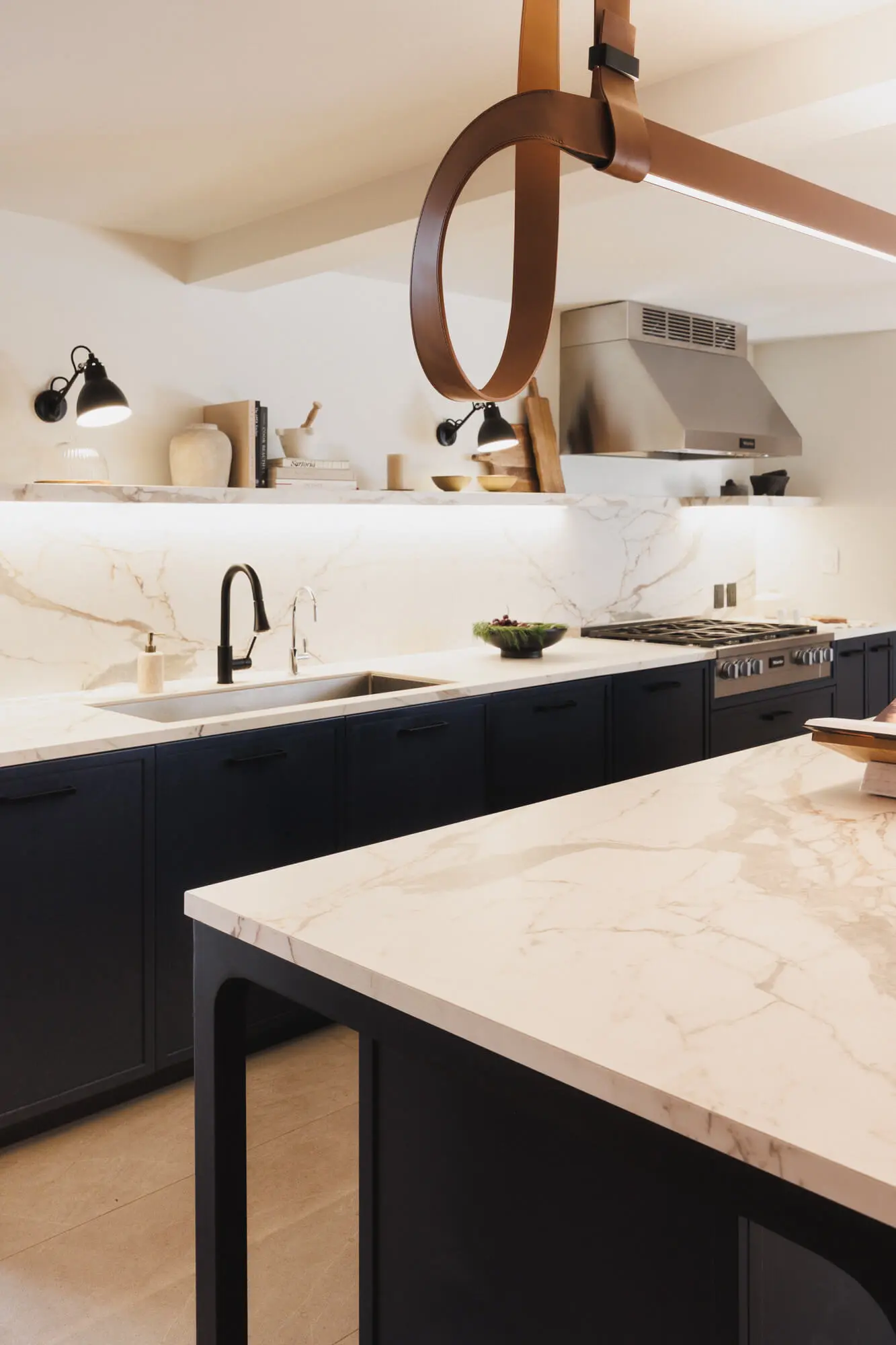
What materials do they work with? A studio with established relationships with material suppliers — Cosentino for engineered stone, Blum for hardware systems, recognized wood suppliers — signals a level of sourcing infrastructure that independent carpenters typically lack.
Do they communicate in your language? This is not about convenience. Technical kitchen discussions — edge profiles, drainage slopes, appliance clearances, gas line specifications — require precise vocabulary. Miscommunication at this level leads to errors that are expensive to correct.
Can they show you finished projects? Visit a completed kitchen if possible. Photos show aesthetics; physical inspection reveals build quality — the smoothness of drawer slides, the precision of panel gaps, the feel of countertop edges.
Timeline and cost expectations
A custom kitchen project in Mexico typically spans three to five months from initial consultation to completed installation. This includes design development (two to four weeks), technical documentation (one to two weeks), fabrication (four to eight weeks), and installation (one to two weeks).
Costs vary significantly based on materials, size, and complexity. As a general reference, high-end custom kitchens in Mexico start at approximately $360,000 MXN (roughly $20,000 USD) and can reach substantially higher depending on the scope. This includes design, materials, fabrication, and installation — not just cabinetry.
Compared to equivalent quality in the United States or Canada, custom kitchen costs in Mexico are typically 30 to 50 percent lower for comparable materials and craftsmanship. The savings come from labor costs and local fabrication, not from lower quality.
Why the process matters more than the product
The most common source of frustration in renovation projects — in any country — is not the quality of materials or the skill of the craftspeople. It is the absence of a structured process.
When design, fabrication, and installation operate as separate, uncoordinated activities, problems compound. Dimensions don’t match. Materials arrive late. Installations require improvisation. The client bears the cost of every gap.
A studio model solves this by treating the kitchen as a single, integrated project from the first conversation to the final adjustment. The process is the product.
Frequently asked questions
How long does it take to design and install a custom kitchen in Mexico?
The complete process — from initial consultation through installation — typically takes three to five months. Design and planning occupy the first four to six weeks, fabrication requires four to eight weeks, and installation takes one to two weeks depending on complexity.
Can I work with a kitchen designer remotely if I don’t live in Mexico full-time?
Yes. Many projects are managed with clients who split their time between countries. Video calls, shared 3D models, and detailed technical documentation make remote collaboration effective, though at least one in-person visit during the design phase is recommended.
How much does a custom kitchen cost in Mexico?
High-end custom kitchens start at approximately $20,000 USD (around $360,000 MXN). Final cost depends on materials, size, appliance integration, and project complexity. This typically includes design, fabrication, and installation.
What is the difference between a kitchen design studio and a carpintería?
A studio with established relationships with material suppliers — Cosentino for engineered stone, Blum for hardware systems, recognized wood suppliers — signals a level of sourcing infrastructure that independent carpenters typically lack.
Do I need permits to renovate a kitchen in Mexico City?
Minor renovations (replacing cabinets, updating finishes) generally do not require permits. Structural modifications, changes to plumbing or gas lines, or work affecting the building’s facade may require a constancia de obra or other permits from the alcaldía. A professional studio will advise on permit requirements specific to your project.
Start a kitchen project
If you’re considering a custom kitchen in Mexico and want to understand what’s possible for your space, the first step is a conversation.